Property development marketing is its own discipline. You're not marketing a single home to a single buyer — you're launching a whole development, often before it exists, to a pipeline of buyers who all need to be convinced at once. The tactics that sell a finished house don't map cleanly onto that.
This is a working playbook: how to position a development, build demand before launch, and convert that demand into reservations without leaking leads along the way.
Start with positioning, not advertising
Before any ad runs, get clear on three things:
- Who the development is for. First-time buyers, downsizers, investors and international buyers want different things and read different signals. A development pitched at everyone lands with no one.
- What actually makes it different. Location, layout, finish, amenities, price point, delivery date. Pick the one or two things that are genuinely better and lead with them.
- The proof. Renders, a 3D model, the spec, the developer's track record. Off-plan buyers are buying trust as much as square metres.
Everything downstream — the ads, the landing page, the sales conversations — should repeat this same story. Consistency is what makes a launch feel credible.
Build demand before you launch
The strongest launches sell a chunk of inventory in the first weeks because demand was built before doors opened.
- A registration/waitlist page. Capture interested buyers early with a simple page and a reason to sign up (first access, early pricing).
- Email nurture. Keep the waitlist warm with genuine updates — construction progress, released units, finish choices — not empty hype.
- Targeted paid + social. Reach the specific audience you defined. For most developments this is precise geo and interest targeting, not mass reach.
- A reason to move. Phased releases and early-buyer pricing create urgency honestly, because they're real.
Give the campaign somewhere worth landing
This is where most property development marketing quietly falls apart. You spend to drive attention, then send that attention to a static PDF or a thin listing that can't answer a single follow-up question.
A development needs a showcase, not a brochure:
- An interactive 3D viewer buyers can actually explore — the building, the units, the layouts.
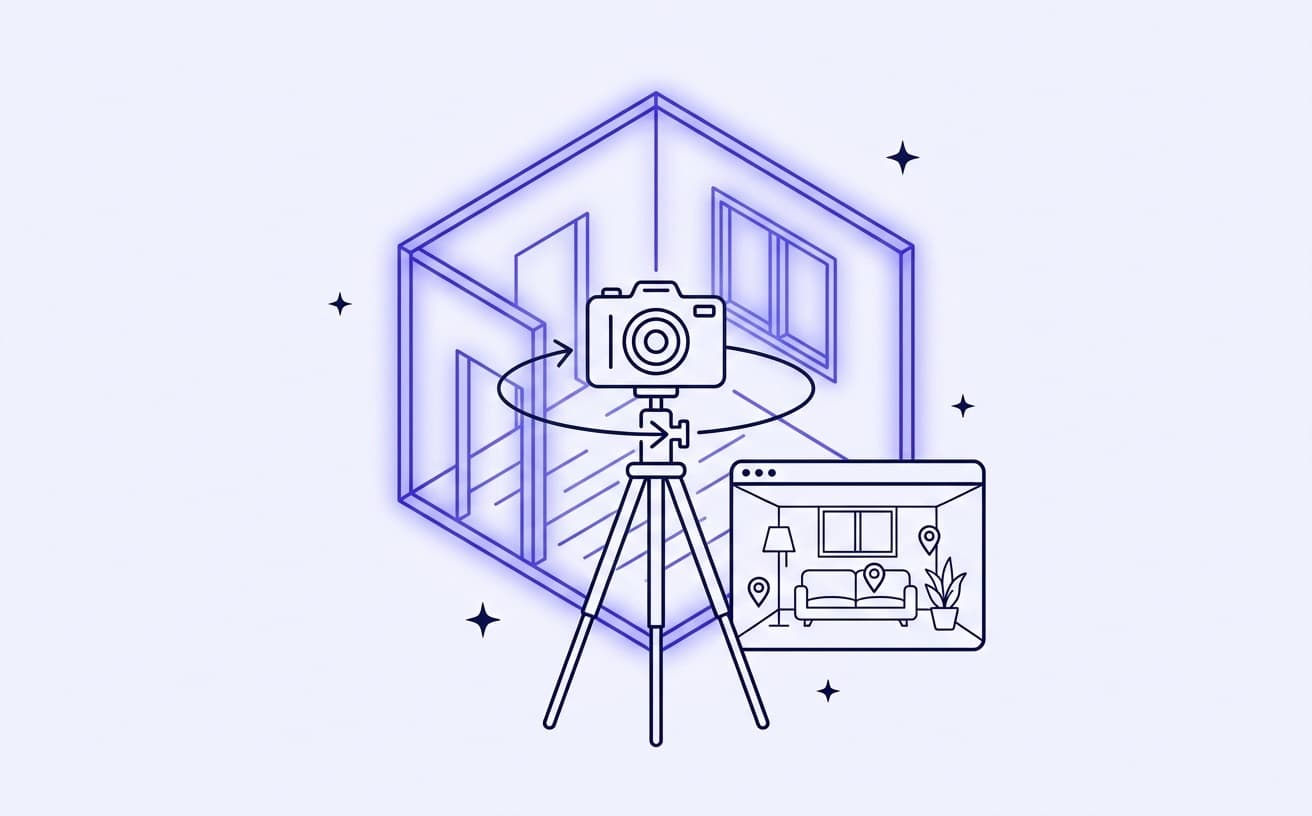
- Virtual tours that make an unbuilt unit feel real to a remote buyer.
- Live availability, so the experience is honest and the buyer trusts what they see.
- On your own brand and domain, embedded in your own site — not parked on a portal.
The showcase is the difference between traffic that bounces and traffic that inquires. It's the single highest-leverage thing in the whole funnel, because every channel points at it.
Capture and convert, without the leaks
Building demand is wasted if leads fall through the cracks between an ad and a sales rep.
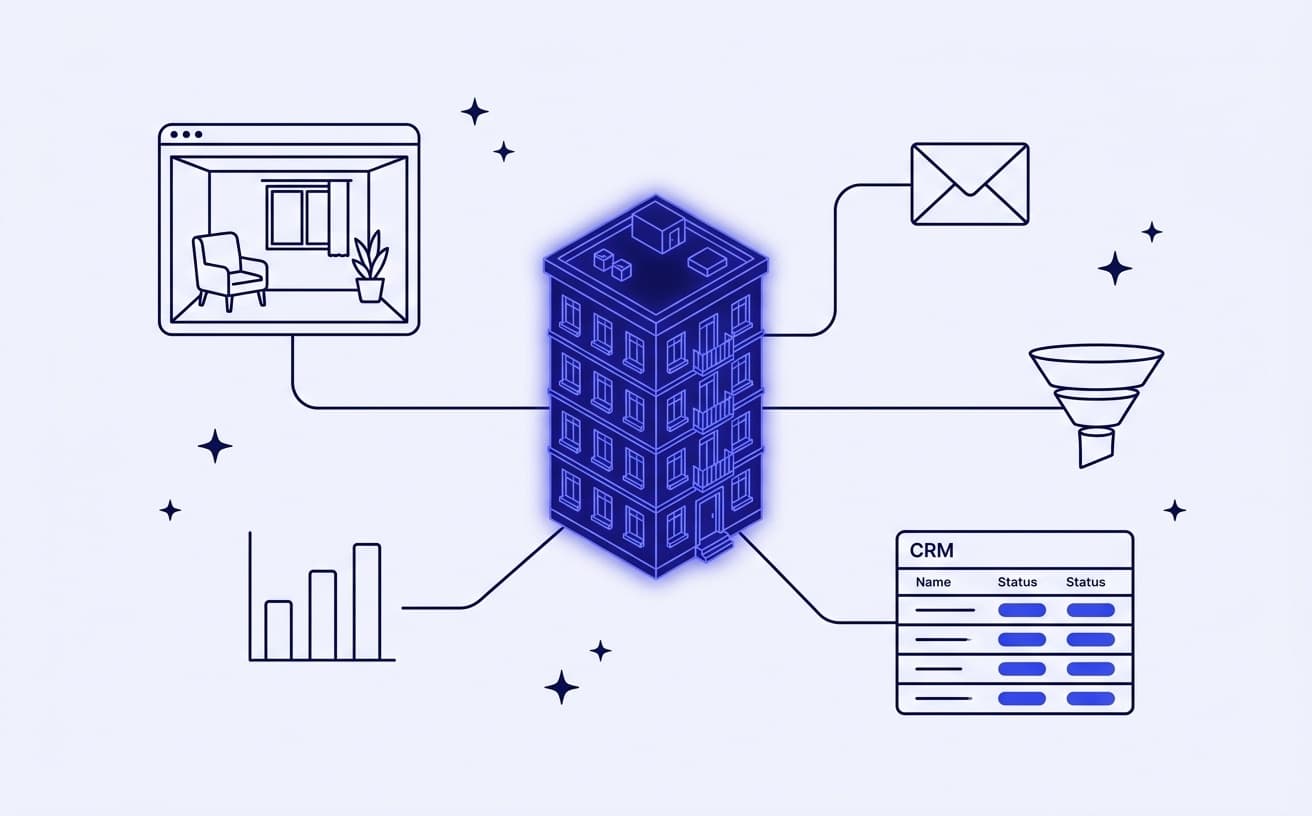
- One inbox for every inquiry. Route inquiries from the viewer, email and forms into a single CRM, attributed to the exact unit that generated them.
- Know who to call first. Score leads by real engagement — which units they compared, what they favourited, how long they explored — so sales spends time on the buyers closest to committing.
- Answer while they're warm. An AI assistant or fast follow-up keeps a hot lead engaged instead of cooling off overnight.
Measure the development, not just the ads
Ad platforms tell you about clicks. They can't tell you which units are pulling attention or which tours are converting. Engagement analytics on the viewer close that loop — you can see what buyers actually do once they arrive, and feed it back into the campaign. That's the difference between spending on marketing and steering it.
A simple launch sequence
- Position — nail the audience, the differentiator and the proof.
- Pre-launch — waitlist page, nurture emails, targeted demand-gen.
- Showcase — a branded, interactive viewer wired to live availability.
- Launch — phased release with early-buyer pricing, all traffic pointed at the showcase.
- Convert — every lead captured, scored and followed up fast.
- Optimise — read engagement, double down on what's working, repeat for the next phase.
Good property development marketing isn't louder advertising. It's a coherent story, a showcase strong enough to carry it, and a pipeline tight enough that nothing you paid to attract slips away.
FAQ
What is property development marketing? It's the discipline of positioning, launching and selling a whole property development — often off-plan — to a pipeline of buyers, spanning demand generation, the sales showcase, lead capture and conversion, rather than marketing a single finished home.
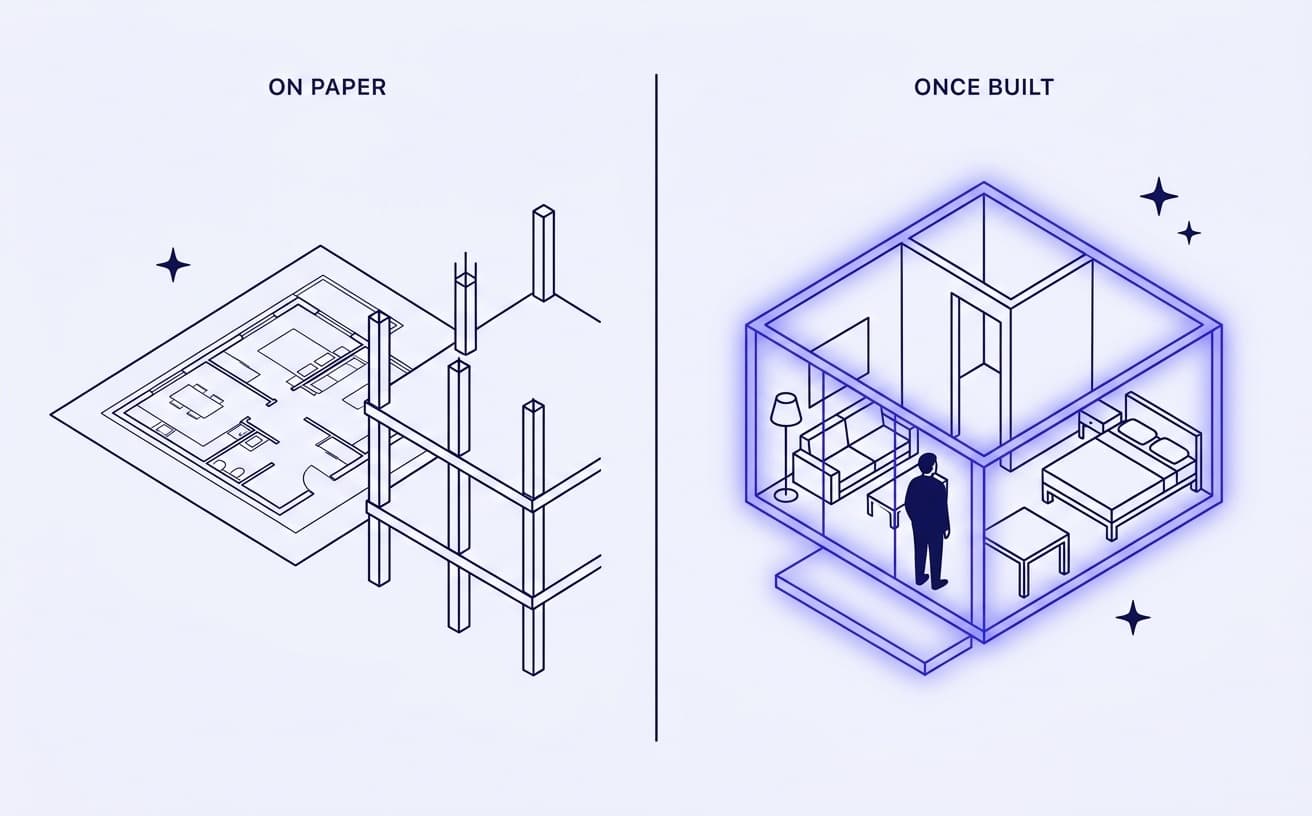
How do you market a new development before it's built? Build demand ahead of launch with a registration page and nurture emails, then send that audience to an interactive 3D showcase and virtual tours built from renders, so buyers can explore units that don't physically exist yet.
What's the most important part of a development's marketing? The showcase every channel points at. If your ads, emails and social all drive traffic to a static PDF, the campaign underperforms; an interactive, on-brand viewer tied to live availability is what turns attention into inquiries.
How do you avoid losing leads during a launch? Route every inquiry into one CRM attributed to the specific unit, score leads by real engagement so sales calls the hottest first, and follow up fast while interest is high.