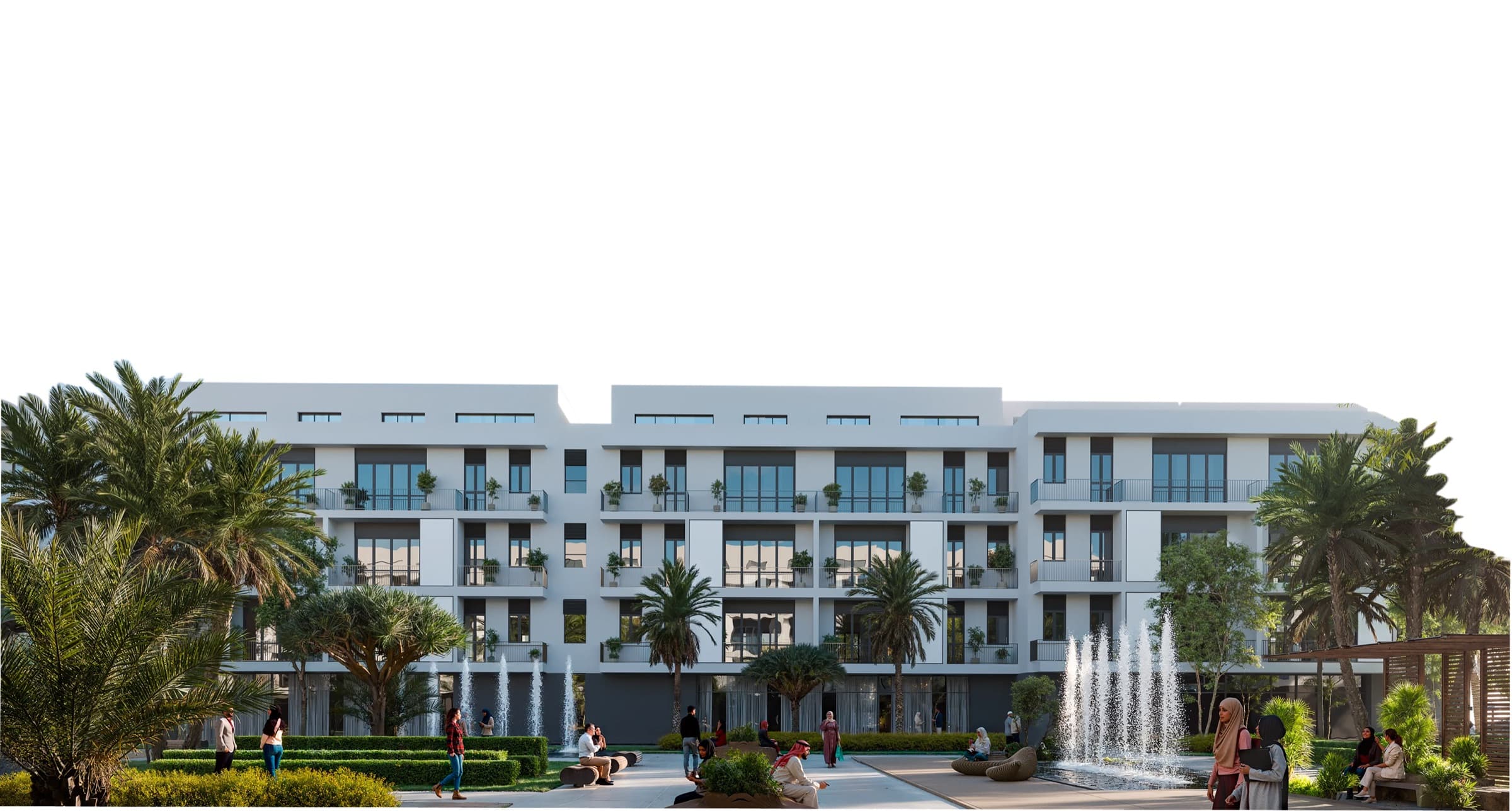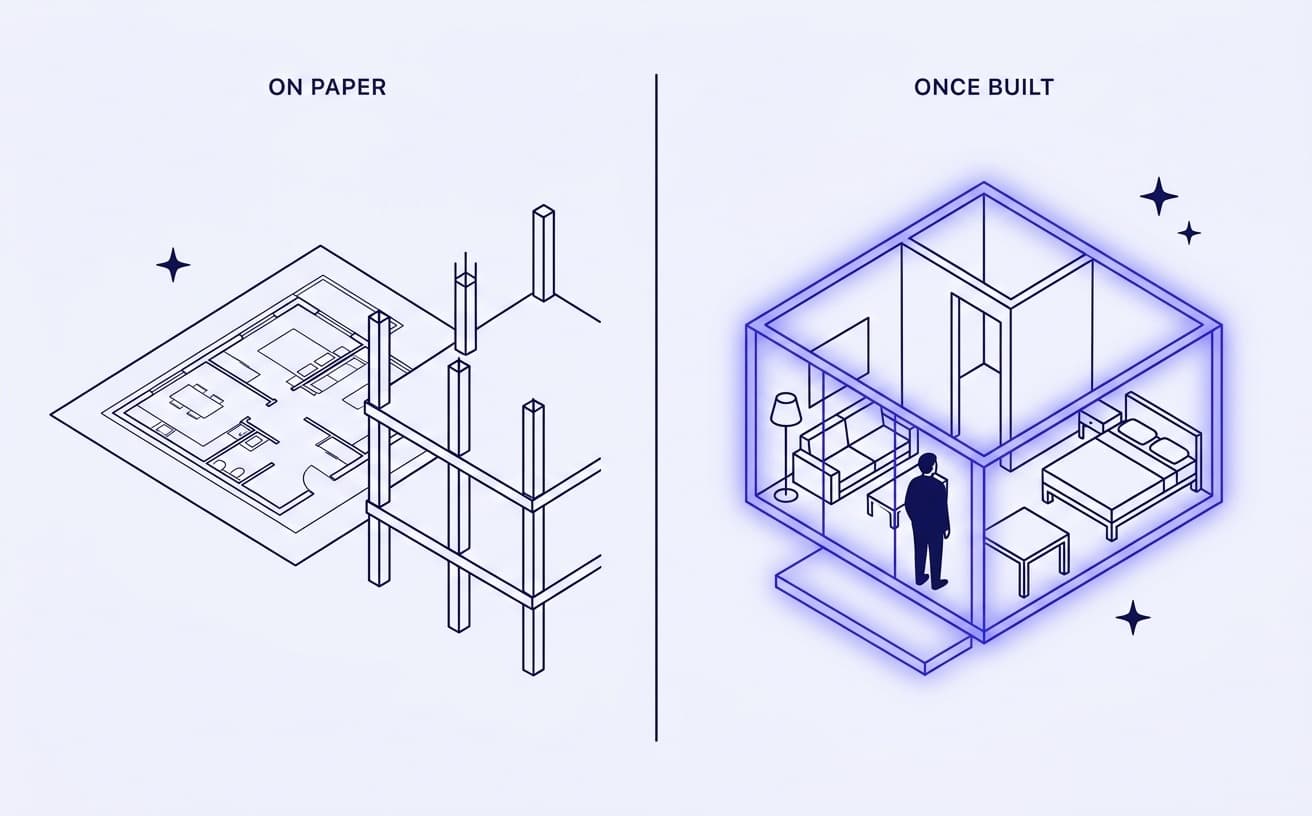
Off-plan property is a home you buy before it's built. There's no finished unit to walk through — you're committing based on floor plans, renders, a specification and the developer's track record. The name is literal: you're buying off the plan.
It's one of the most common ways new-build homes are sold, and for a first-time off-plan buyer it can feel strange to hand over a deposit for something that only exists on paper. So here's what's actually going on, why people do it, and what to watch for.
How buying off-plan works
The rough shape of an off-plan purchase looks like this:
- Reservation. You pick a unit from the available inventory and pay a reservation fee to take it off the market.
- Exchange. Contracts are exchanged and a deposit is paid — often around 10–20%, depending on the market and the developer.
- Construction. The building goes up. This can take anywhere from several months to a few years.
- Completion. The unit is finished, the balance is paid, and you get the keys.
Because you commit early, the price is usually fixed at today's value while the home is delivered later. That single fact is the source of both the appeal and the risk.
Why people buy off-plan
Price and choice. Early buyers often get the best price of a development's sales cycle, and the widest pick of units — the best floors, aspects and layouts go first.
Time to plan. There's a long runway between reservation and completion to arrange finance and finances.
Potential appreciation. If the market rises during construction, the home can be worth more by completion than the price paid. That's an upside, not a guarantee.
A brand-new home. Everything is new, usually with a builder's warranty, and often some choice over finishes if you buy early enough.
The risks worth naming
Off-plan isn't free money, and a good developer is upfront about the trade-offs.
The market can fall. If values drop during construction, you may complete on a home worth less than you agreed to pay.
Delays happen. Construction timelines slip. A completion date is a target, not a promise.
It won't be a photo. You're buying from renders, so the finished space can differ from what you pictured — which is exactly why the quality of the visuals you're shown matters so much.
Developer risk. You're trusting a company to deliver. The developer's history, funding and reputation are part of what you're buying.
Off-plan vs. buying a completed home
| Off-plan | Completed | |
|---|---|---|
| What you see | Plans, renders, a show unit | The actual home |
| Price | Fixed early, often lower | Current market price |
| Move-in | Months to years away | More or less immediate |
| Choice of unit | Widest at launch | Whatever's left |
| Main risk | Market shift, delays | Less upside on price |
How developers sell off-plan well
If you're on the other side of this — a developer or a sales team marketing units that aren't built yet — the whole job is making an unbuilt home feel real and safe enough to commit to. That comes down to a few things:
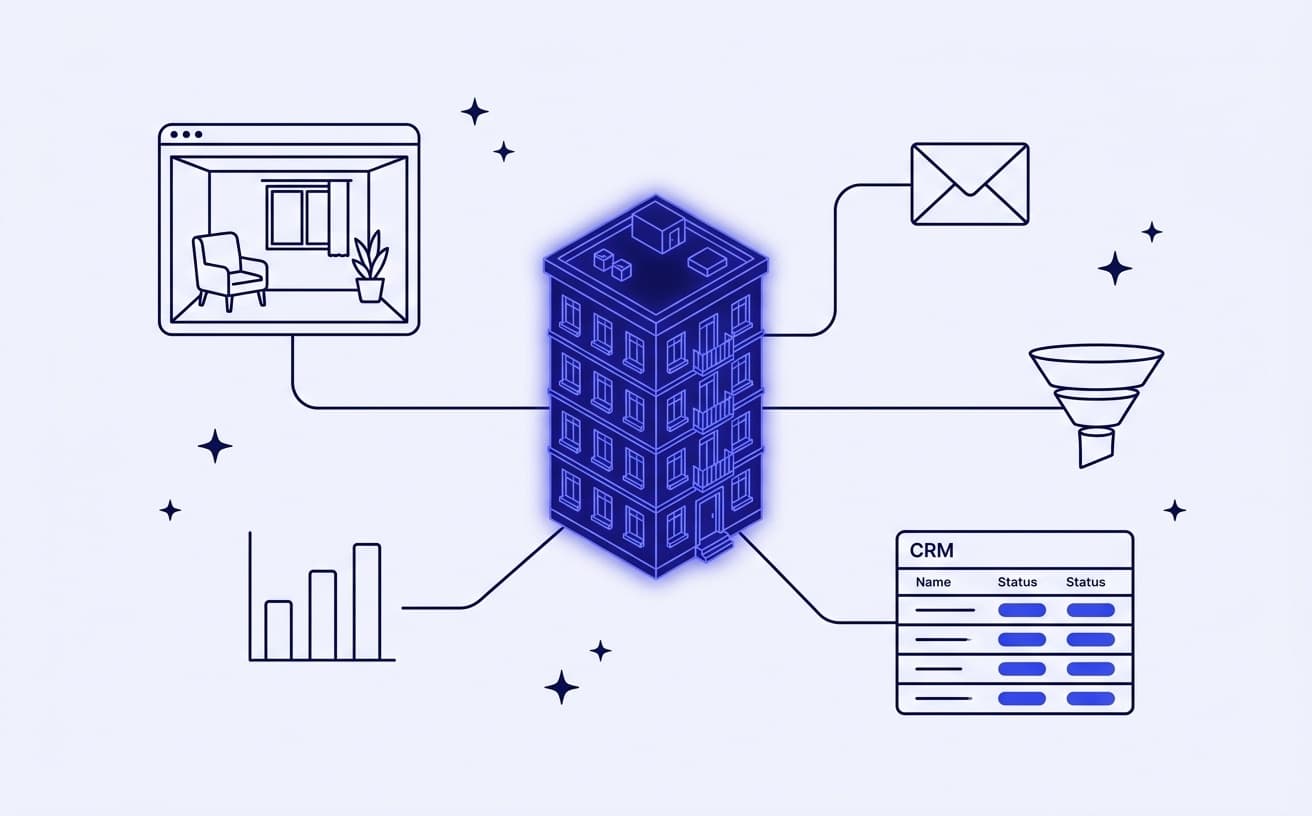
- Show, don't describe. A navigable 3D model, interior walkthroughs and virtual tours built from renders let a buyer experience a unit that doesn't physically exist. A PDF floor plan can't.
- Let buyers read the plan. Interactive floor plans that a buyer can click, view in 3D and compare side by side turn an abstract layout into a decision.
- Keep availability honest. Real-time unit status means an early buyer never inquires about a unit that's already reserved — the fastest way to lose trust is a phantom listing.
- Capture interest the moment it peaks. Inquiries should flow straight into a CRM, attributed to the exact unit, while the buyer is still excited.
Selling off-plan is a confidence game in the good sense: the buyer's confidence is the product. Everything the developer shows is there to close the gap between a plan and a home.
FAQ
What does off-plan property mean? It means buying a property before it has been built, based on the developer's plans, renders and specification rather than a finished, physical unit.
Is off-plan property a good investment? It can be, mainly because you fix the price early and may benefit if the market rises before completion. But it carries real risk — prices can fall and construction can be delayed — so it depends on the developer, the market and your timeline.
How much deposit do you need to buy off-plan? It varies by market and developer, but a deposit of roughly 10–20% on exchange of contracts is common, usually after a smaller reservation fee.
What happens if an off-plan development is delayed? Contracts typically set out a longstop date and your rights if it's missed. Delays are common, so it's worth understanding those terms and the developer's delivery record before you commit.
Can you see an off-plan home before buying? Not physically, but good developers let you explore it in detail through 3D models, interactive floor plans and virtual tours built from renders, plus a show unit once one is available.