Objection handling is usually framed as something a salesperson does on a call. For off-plan property, most of it happens before the call, while a buyer is alone with the listing, talking themselves into or out of getting in touch.
By the time someone fills in a form, they've already resolved the easy objections on their own. The ones that stop a buyer from ever contacting you are the ones the listing failed to answer. There are five that come up almost every time. Answer them in the page, and your sales team inherits warmer, shorter conversations.
Why an objection is a buying signal
An objection is not a rejection. A buyer who has stopped caring simply leaves; the one still weighing a doubt is still interested. The doubt is the last thing standing between them and the enquiry, which makes it the most valuable information you have about that buyer.
It also helps to remember that these doubts are rarely coldly rational. Harvard Business School professor Gerald Zaltman is widely cited for the finding that the large majority of purchasing decisions happen below the level of conscious reasoning, driven by emotion and then justified with logic after the fact. Off-plan buying is an especially emotional purchase: a large sum committed to something that only exists as an image. Treat each of the five questions below as an emotional worry first and a factual one second, and your answers will land better.
"Will it actually look like this?"
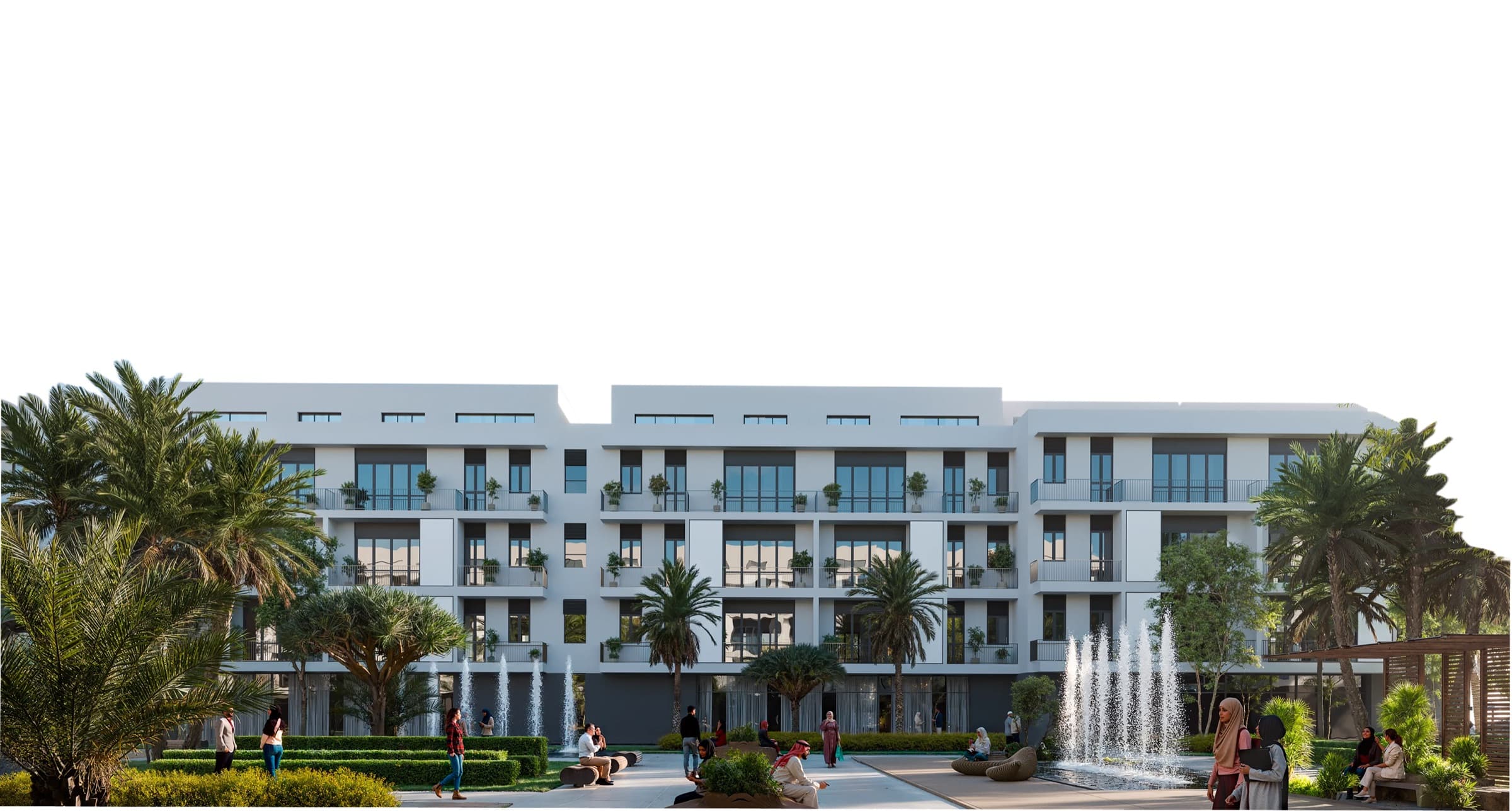
This is the first and deepest off-plan doubt: the fear of the gap between the render and the keys. The buyer has seen a glossy image and is quietly bracing for disappointment. On a call it surfaces sideways, as "so how accurate are these images, really?" or "is that the actual view from the balcony?" The question sounds like curiosity. It is anxiety.
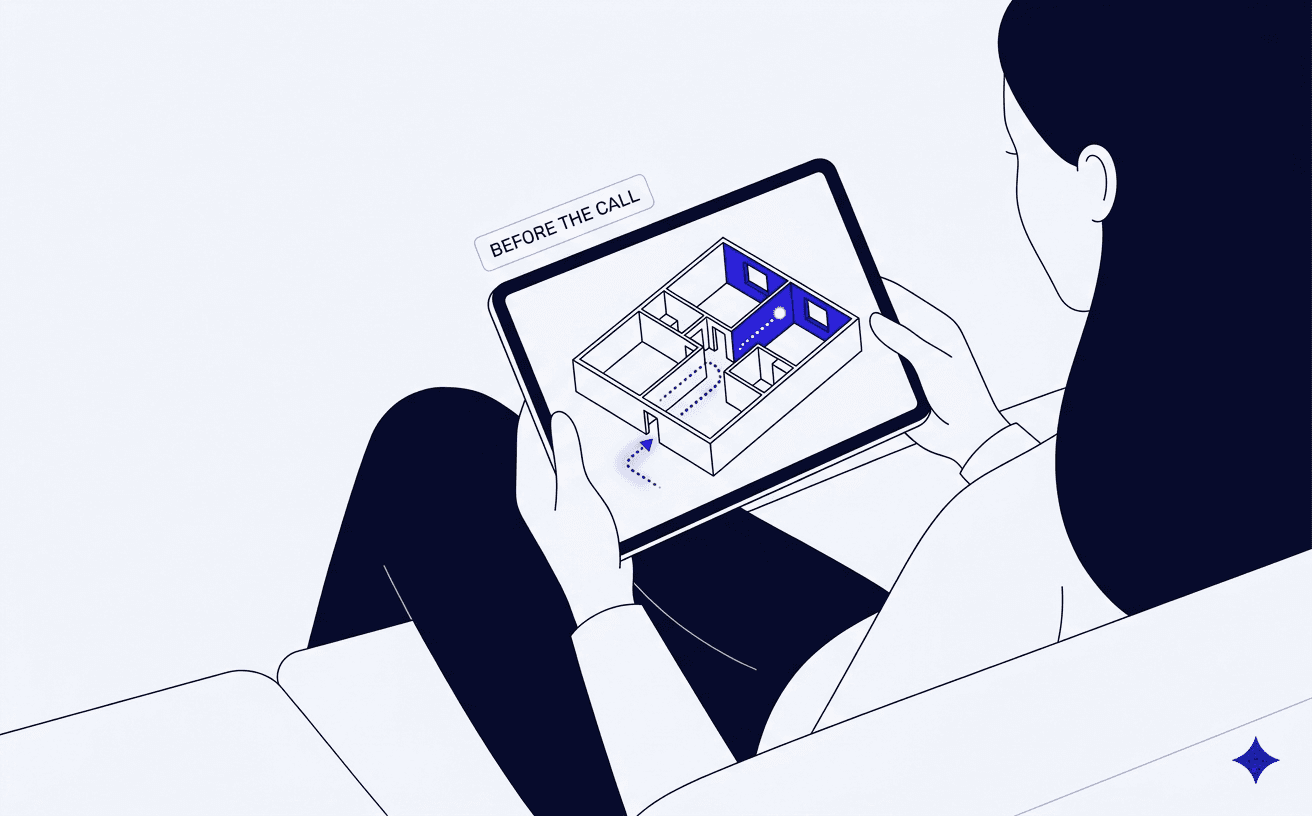
You don't beat this objection by adding more polish. You beat it by adding evidence. Show completed work from past developments next to the renders that preceded them, so the buyer can see for themselves how close your finished product came to your promise. Let the buyer walk a real 3D tour rather than only admire a still. Be precise about specifications and finishes instead of using aspirational language that you'd have to walk back later.
The recommended response on a call is to never defend the render on its own terms. Instead: "Let me show you the last building we delivered against the images we published for it." Then send the paired before-and-after and the interactive tour link. That appetite for remote conviction is real and growing — a LendingTree survey found 24% of homeowners had made an offer on a property sight unseen. Buyers will commit without a physical visit, but only when the digital evidence carries the weight the visit would have. The buyer isn't asking for perfection. They're asking whether you'll deliver what you showed.
"Can I afford it, really?"
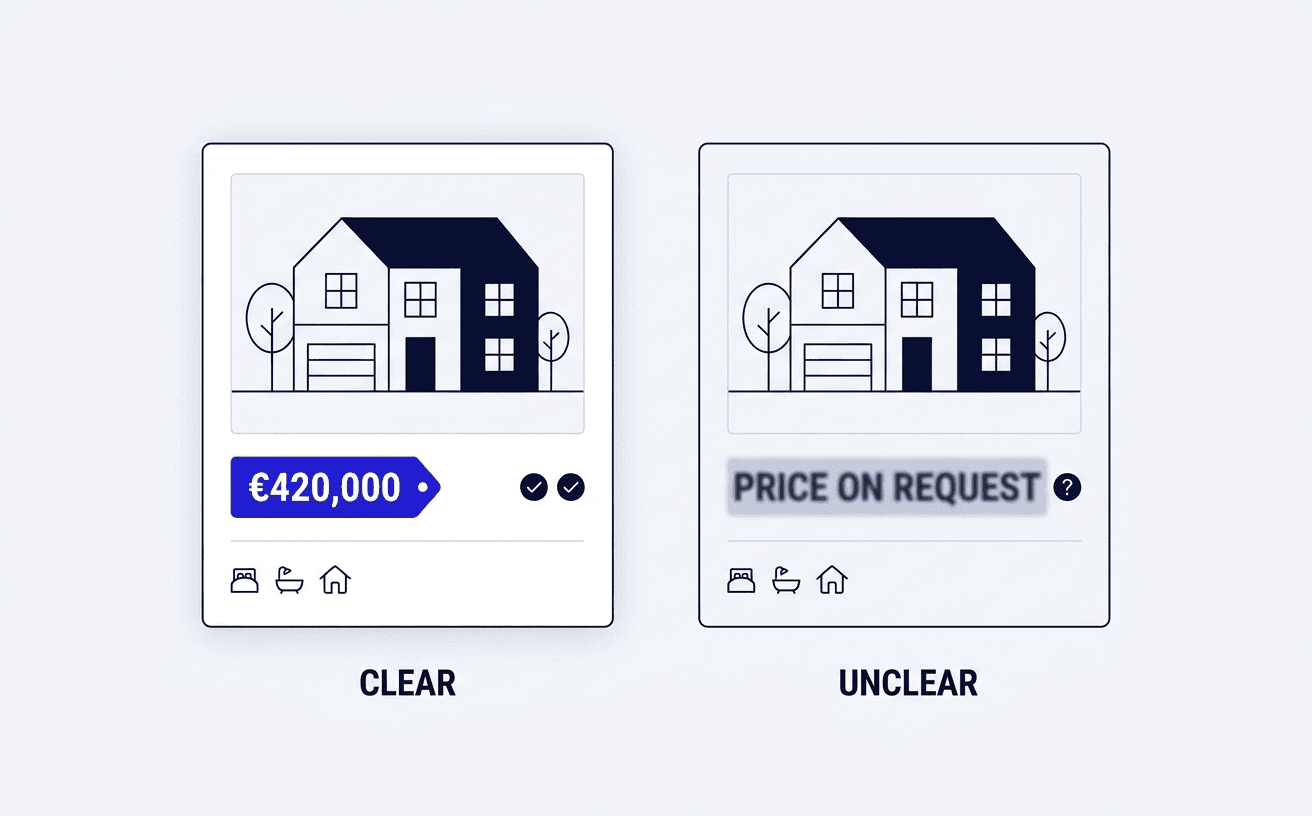
A buyer who can't quickly establish whether a unit is in their range will often just leave, and they'll assume the worst about the price while doing it. "Price on request" reads as "more than you can afford." The doubt underneath is not only about the headline number; it's the fear of investing hope in something that turns out to be a stretch, and of the small embarrassment of asking.
Put the number where they can find it, then make it make sense: what's included, how the payment schedule maps to the build timeline, what the deposit looks like. On a call this objection often arrives disguised as a question about extras — "and what would parking and the kitchen upgrade add on top?" — because the buyer is quietly rebuilding your price to check it holds together.
Meet that head-on. Walk them through a worked example for the specific unit: the deposit, the stage payments, and the total including the options they've asked about. Send a one-page payment breakdown they can keep. A buyer who can see how the price was built spends their energy deciding, not guessing.
"What happens to my money before it's built?"
Off-plan means paying for something that doesn't exist yet, and the sensible buyer wants to know their deposit isn't disappearing into a hole. This is the fear conveyancing solicitors write about most: a developer delaying, running out of funding, or failing before completion, with the buyer's money tied up and hard to recover. This objection is rarely said out loud, because it feels rude to ask. It still decides outcomes.
Address it plainly, before you're asked. Set out the payment milestones tied to construction stages, whatever protections, warranties or escrow arrangements apply, and the legal structure of the purchase. On a call, the tell is a buyer who goes quiet and then asks something procedural — "and who holds the deposit in the meantime?" That is the whole objection surfacing in a single question, and a confident, specific answer resolves far more than the words alone.
You don't need to turn the listing into a contract. You need to signal that the question has an answer and you're not avoiding it. Vagueness here reads as something to hide.
"What if my plans change?"
Buyers know a build takes time, and life moves during it. Jobs change, families grow, circumstances shift. The unspoken worry is being locked into a decision that stops fitting them halfway through — and, for investors, the related fear that the market or their financing moves against them before completion.
Be upfront about timelines, expected completion, and what flexibility exists, whether that's around assignment, configuration choices made before a certain stage, or the process if something genuinely changes. On a call this shows up as a hypothetical: "and if I needed to sell before it completes?" Don't treat it as a red flag. It's a buyer trying to make the decision feel reversible enough to say yes to.
Give them the real answer, including the constraints. Honesty about the limits is more reassuring than vagueness about them; vagueness reads as a trap. Where you can, put the completion window and any assignment terms in the listing itself, so the buyer isn't relying on memory of a conversation.
"Why this development and not the one down the road?"
Eventually every serious buyer comparison-shops. If your listing doesn't give them a reason to choose you, they'll default to whichever option made the decision easiest, which is often just the one with the clearest information. On a call this is the buyer naming a competitor, sometimes bluntly: "I'm also looking at the scheme two streets over — what's the difference?"
This is where the location story, the specifics of the unit, and the quality of your media do real work. A buyer who can see the neighbourhood, walk the space, and understand exactly what they're getting has been handed the argument for choosing you. Resist the urge to run down the competitor; buyers distrust it. Instead, make your own case concrete: the exact aspect, the floor, the finish, the two minutes to the station.
Then send them away with something to compare against — the tour, the spec, the payment breakdown. A buyer left to assemble your argument themselves usually doesn't bother. A buyer holding your materials next to a rival's thinner ones has already started drawing the conclusion you want.
Answer them before they're asked
None of these five objections is unreasonable, and none of them is new. The developers who close more off-plan deals aren't the ones with the slickest rebuttals on the phone. They're the ones whose listings already answered the questions, so the buyer arrives at the call having cleared the doubts and ready to move.
Build it in deliberately. Treat the five questions as a checklist your listing template has to pass before it goes live, and give your sales team the same five scripts and the same set of things to send, so every call answers them the same way. Handle the objections in the page, and the conversation starts much closer to yes.