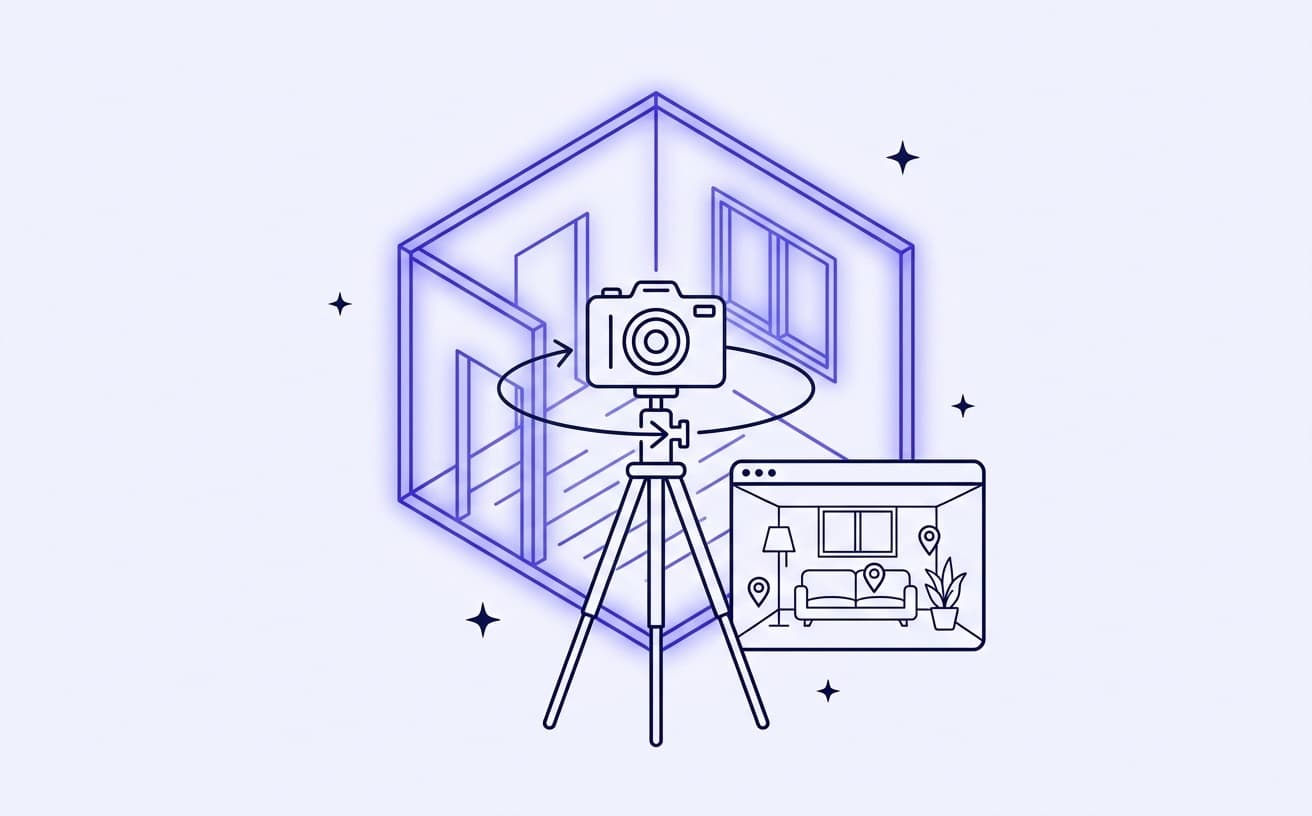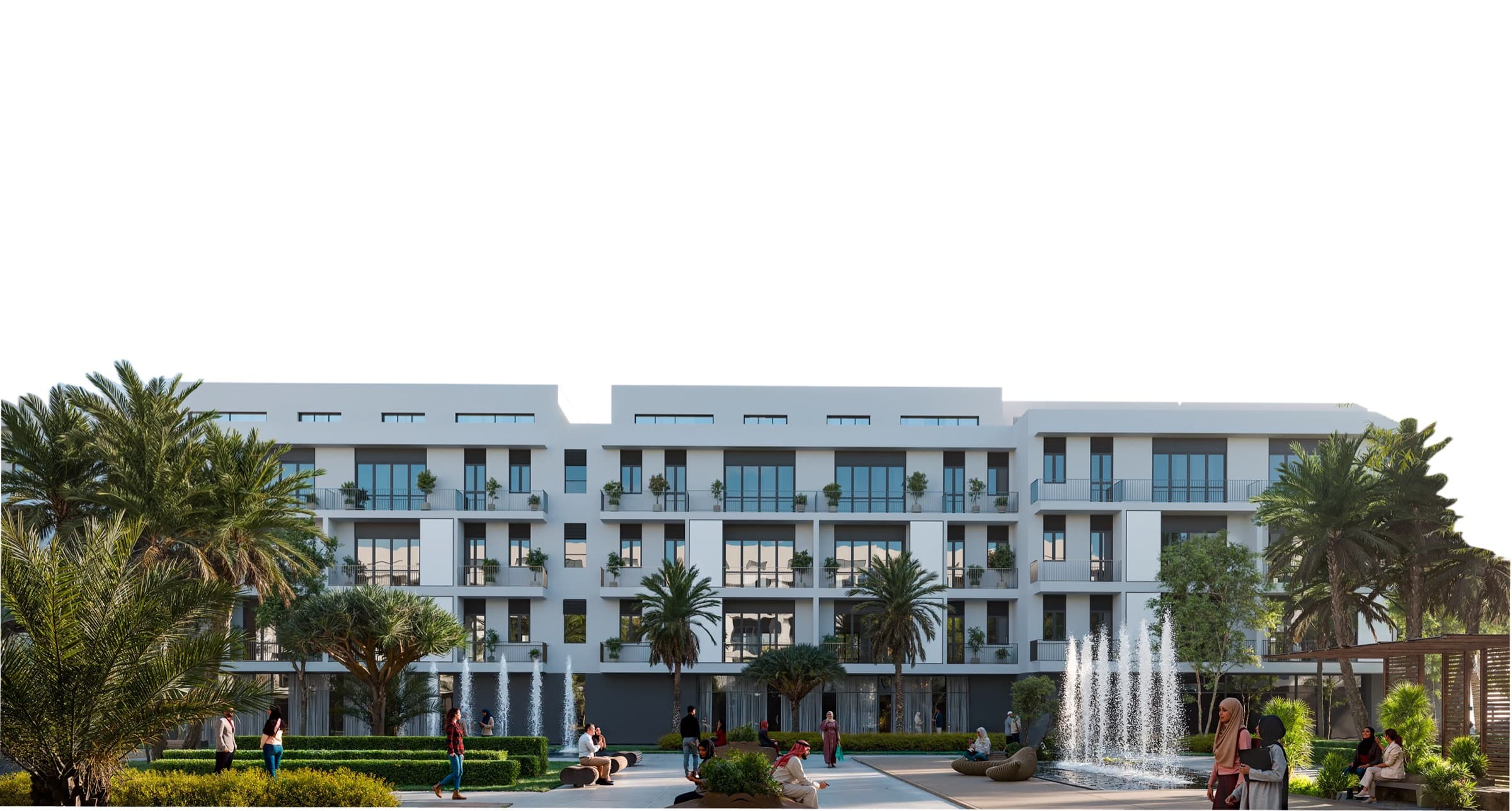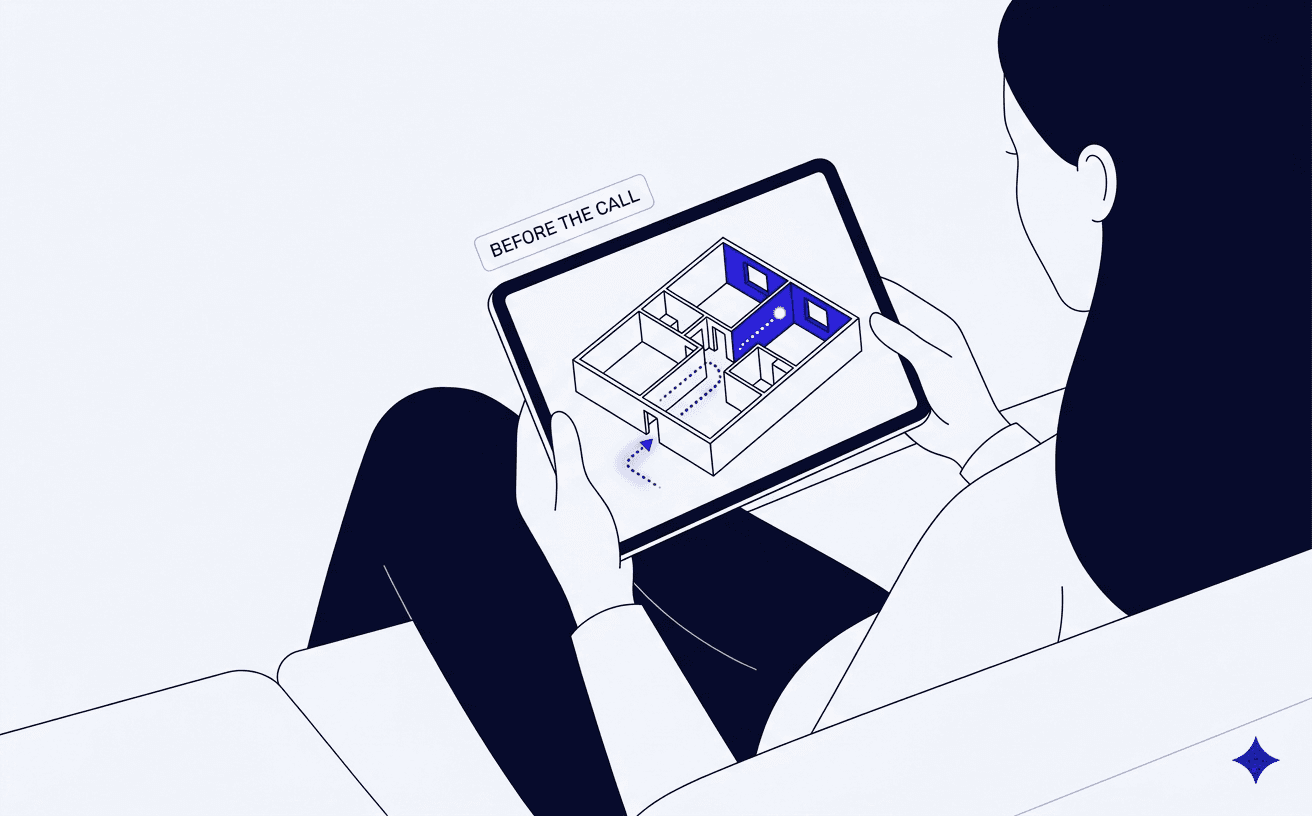
By the time someone books a viewing for an off-plan unit, they have usually made up most of their mind. The call isn't the start of the conversation. It's the moment a buyer confirms something they already worked out on their own, sitting on the sofa with a tablet, three weeks earlier.
That gap between first click and first contact is where a 3D tour earns its keep. If you only look at form fills, you miss it entirely. So it's worth looking closer at what people actually do in there.
The pattern is fairly consistent. A buyer opens the tour, gets their bearings for a few seconds, then moves with intent towards the spaces that will make or break the decision. They stop. They look up, down, into corners. They go back to a room they've already seen to check it against another. Only after that private, unhurried process do they decide whether you're worth a phone call. The tour isn't a brochure they flick through. It's a viewing they conduct themselves, on their own terms, before you know they exist.
They walk the route to the thing they care about
Watch enough session recordings and a pattern shows up fast: buyers don't explore evenly. They head straight for one or two rooms and linger. For a young couple it's often the second bedroom: they're checking whether it really takes a cot and a desk. For downsizers it's storage and the kitchen. Families with teenagers want to know how far the bedrooms sit from each other.
The tour answers a question they haven't said out loud yet. A flat photo can't, because a photo decides the framing for them. A tour lets them go and check the corner the photographer left out.
That freedom to look where they want is most of the point. A Harvard Business School study of more than 75,000 home sales, co-authored by Isamar Troncoso, found the clearest thing virtual tours do is help buyers screen properties efficiently — the value shows up in who quietly rules a home out as much as in who calls. Your tour is doing that filtering whether you designed it to or not.
If your analytics show people repeatedly returning to the same space, that's not a bug. That's the unit's selling point telling you what it is.
They measure against their current home
Buyers rarely judge a space in the abstract. They judge it against the place they're standing in right now. "Is this living room bigger than ours?" "Would our table fit here?"
This is why dimensions and a sense of real scale matter more than a glossy render. A tour that holds proportion honestly, where a doorway feels like a doorway, does quiet, constant reassurance work. The buyer isn't consciously grading you on accuracy. But if something feels off, the doubt lingers, and doubt is what stops the call from happening.
The layout matters as much as the scale. Zillow's research found that 81% of buyers are more likely to visit a home in person when the listing includes a floor plan they like, and around three-quarters say a clear plan helps them work out whether a home is right for them at all. People need to understand how the space fits together before they'll invest a Saturday in seeing it. A tour that makes the flow obvious is answering that question in advance.
They send it to someone whose opinion they trust
Almost no one buys property alone. The tour gets forwarded to a partner, a parent, a friend who "knows about these things." That second viewer never met your sales team and never will. Your listing has to make its own case without you in the room.
A couple of practical consequences follow from that:
- The unit name and key facts should travel with the link. If a shared tour opens on a phone with no context, the share did half its job.
- The first ten seconds carry disproportionate weight. The forwarded viewer decides quickly whether this is worth their attention.
Treat every link as though it will be opened cold by a sceptic. The version of your listing that persuades is the one that survives being passed to someone with no patience and no context.
What a self-guided buyer already knows before the call
By the time a well-designed tour has done its work, the buyer arrives at the call already carrying a surprising amount of settled information. They know the layout and roughly how the rooms connect. They have a feel for scale and whether their furniture fits. They've formed a view on light, on the aspect, on which room they'd claim as their own. They've likely checked the tour against two or three rivals and decided yours is worth the time.
What that means is stark: the questions they still have are the ones the tour couldn't answer. Price certainty. Availability of the specific unit they walked. Completion dates, payment structure, what's included in the spec, what the service charge really covers. The easy, visual questions are spent. The call is now about commitment and detail.
This reframes what a good sales conversation sounds like. If your team is still opening with "let me tell you about the development," they're re-selling ground the buyer covered on their own days ago — and it reads as though you haven't caught up to where they are. The prospect who books a viewing has usually pre-qualified themselves. Meet them at the stage they're actually at, not the start of the funnel.
How to make a tour answer questions instead of raising them
A tour that raises more questions than it settles pushes the call further away, not closer. Every unanswered doubt is a reason to keep browsing. So the design job is to close loops, not open them.
- Lead with the room buyers care about, not the front door. The lobby is the least persuasive part of any home.
- Keep the facts that anchor a decision one tap away (price, size, availability) so the buyer comparing against their own flat never has to leave to find them.
- Make availability honest and current. Nothing kills a warm lead faster than discovering the unit they fell for sold a month ago.
- Don't hide the plan. If a buyer has to reconstruct the layout in their head from a sequence of rooms, some of them won't bother. Give them the map.
- Answer the obvious objection in the tour, not on the call. Storage, ceiling height, the north-facing bedroom — if you know a space prompts a question, address it where the question is being asked.
None of this requires more features. It requires arranging the ones you have around how people actually behave. A listing built this way sends fewer confused enquiries and more decided ones.
Turning tour behaviour into sales signal
The behaviour inside a tour is data, and most developers throw it away. They log the form fill and ignore the twenty minutes that preceded it.
That's the richest part. Which units get explored and abandoned tells you where your pricing or layout is losing people. Which rooms hold attention tells you what to lead with in the next release. A buyer who returned to the tour four times over a fortnight is a warmer lead than one who filled the form on their first visit — and your team should be able to tell the difference before they dial.
You don't need a data science function to use this. Even a rough sense of which units draw repeat visits and which get a glance and a bounce will sharpen how you prioritise follow-up and where you spend your marketing. The tour is a live record of intent. Reading it turns a passive brochure into a qualifying tool.
The call still matters. But treat it as the finish line, not the starting gun. The tour is where the real persuading happens, and the better it answers the questions buyers are quietly asking, the warmer every conversation you do have will be.