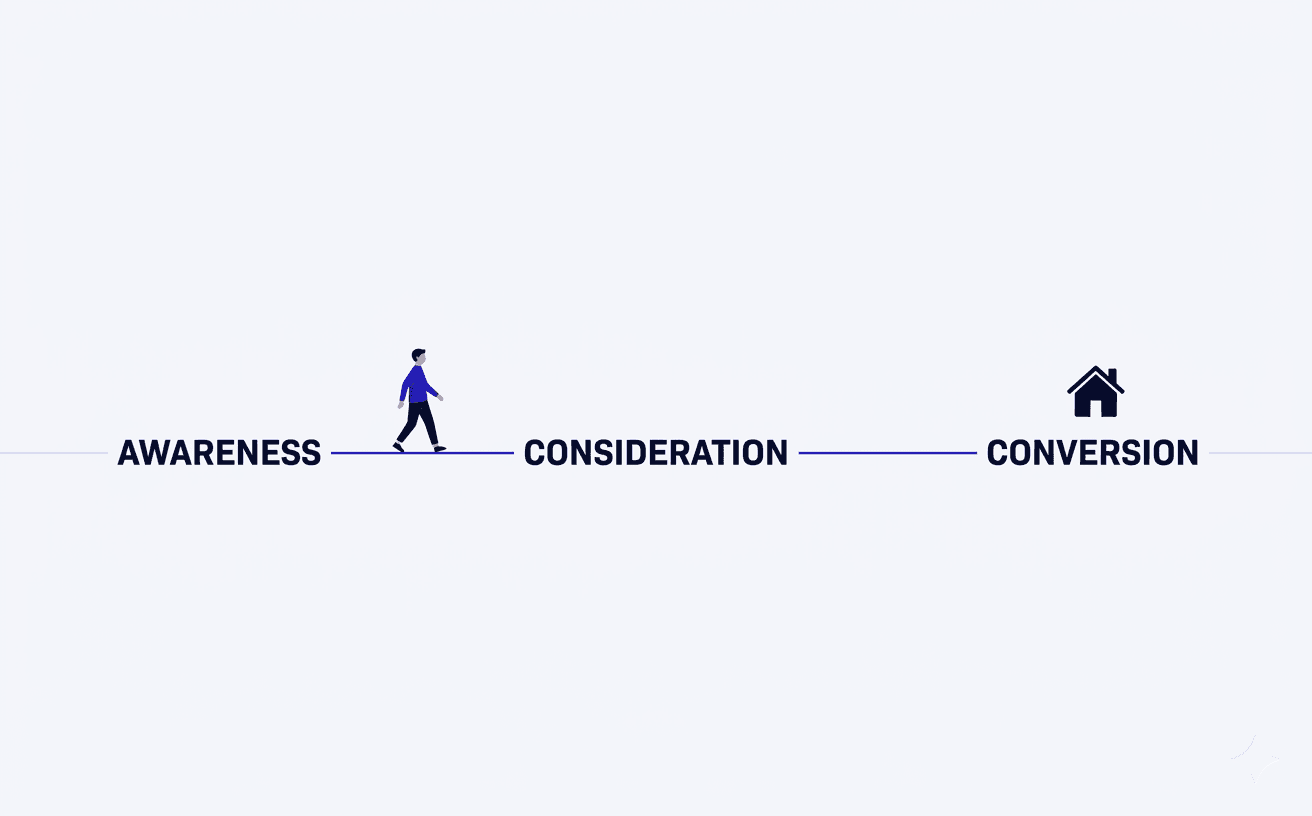
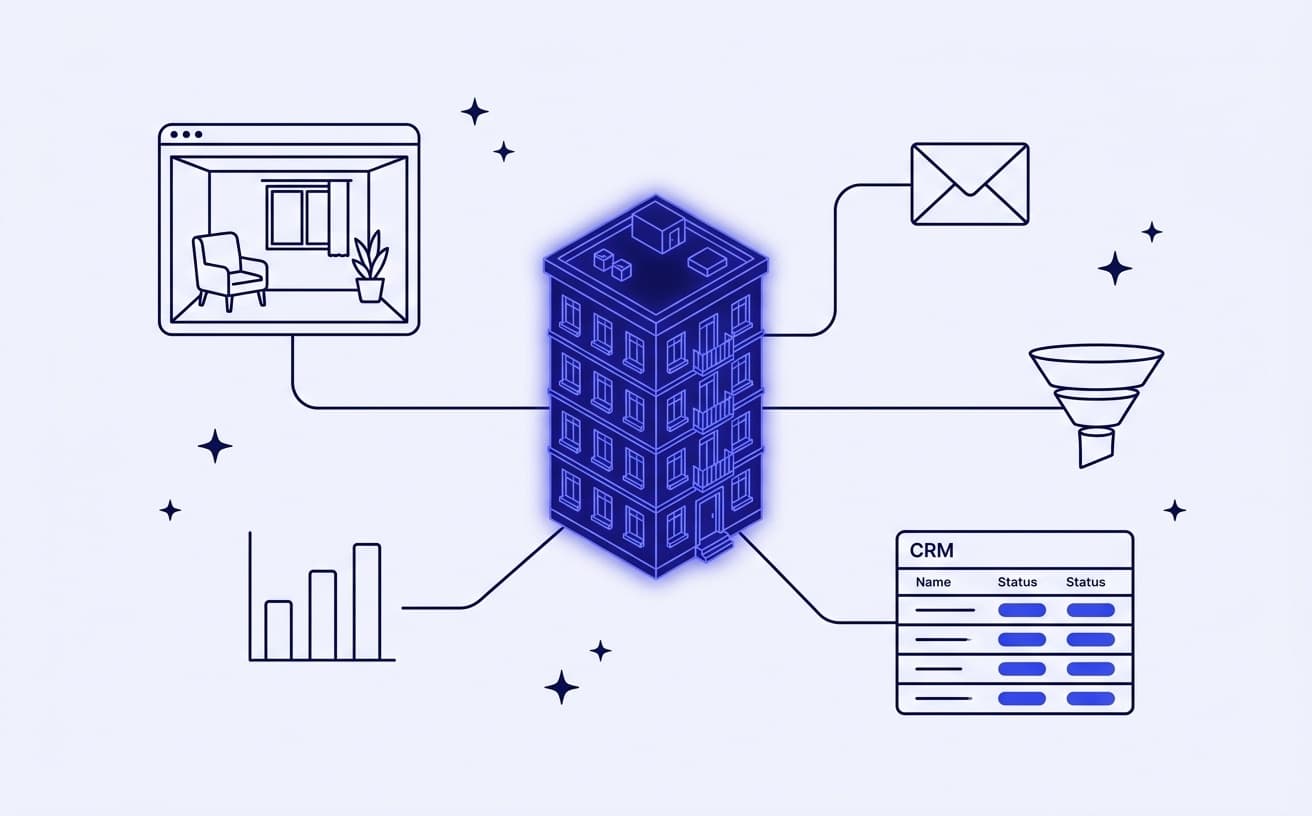
A buyer spends twenty minutes inside your 3D tour, lingers on the corner unit, checks the payment schedule twice, and fills in a form. By the time a salesperson calls them back, all of that is gone. The lead shows up as a name, an email, and a unit number, and the conversation starts from zero.
That loss isn't a CRM problem in the usual sense. The CRM is working fine. The problem is the handover: the moment a buyer's accumulated context is supposed to travel from where it was created to where it's acted on, and instead falls in the gap. Off-plan deals are long and high-consideration, which means there are many handovers, and each one is a chance to drop something that mattered.
Where the context leaks
The leaks are predictable once you look for them.
- From listing to lead. A buyer's behaviour (which unit they explored, what they returned to, how engaged they were) rarely makes it into the record. The salesperson gets a form, not a story.
- From channel to channel. The same buyer enquires by form, then replies to an email, then sends a WhatsApp message. Three threads, three places, no single view of one person.
- From person to person. A lead gets reassigned, someone goes on leave, an agent leaves. The relationship resets because the context lived in someone's head and their inbox, not in the system.
- From interest to contract. As the deal moves toward legal and finance, the early signal (what this buyer actually cared about) stops travelling, and late-stage staff re-litigate decisions that were settled weeks ago.
None of these is dramatic on its own. Together they're why a warm lead goes cold and nobody can quite say when.
The dirty-data tax
Every leak has a downstream cost, and it's larger than it looks. Gartner puts the price of poor data quality at an average of $12.9 million a year for the organisations it surveys. That number sounds like an enterprise abstraction until you watch it play out one lead at a time.
The failure modes are mundane, which is exactly why they persist:
- The duplicate. A buyer enquires from the portal, then again from your own site a fortnight later. Two records, two agents, two opening calls. The buyer concludes your team doesn't talk to itself, and they're right.
- The stale field. A phone number captured six months ago and never touched since. Gartner estimates roughly 30% of CRM data goes out of date within a year, so a database left alone doesn't hold steady, it rots.
- The empty stage. A lead sitting in "new" for three days because nobody agreed who owns "new". Timing here is not a soft metric. Harvard Business Review's audit of online sales leads found firms that made contact within an hour were nearly seven times more likely to qualify a lead than those who waited even an hour longer. A record that can't route itself burns that window.
- The orphaned note. The one detail that would have closed the deal (a completion date they need to hit, a second bedroom for an ageing parent) written into a reply the next agent never reads.
Dirty data isn't a tidiness issue. It's leads you paid to generate and then quietly threw away.
Clean data is captured, not corrected
The instinct is to fix dirty data after the fact: dedupe, merge, tidy. That's necessary, but it's downstream of the real fix. Data stays clean when it's captured cleanly at the source and carried forward automatically, rather than re-entered by hand at each step.
A few things make the difference:
- Capture context at the point of interest. If the listing knows which unit a buyer engaged with, that should land on the lead record, not in a separate analytics tool the sales team never opens.
- Keep one record per person, not per enquiry. A returning buyer who fills in a second form is the same human. The system should recognise that, or your team will be calling one person as if they were three.
- Make the next owner inherit the full picture. When a lead moves to a new stage or a new person, the history should move with it intact, so the buyer never has to repeat themselves. Nothing erodes trust faster than a buyer explaining the same thing for the third time.
A minimum hygiene routine
You don't need a data-governance function to close most of the gap. You need a short list of habits that run whether or not anyone remembers to run them.
Deduplicate on the way in, not once a quarter. Match on email and phone at the point of capture and merge on contact, so a returning buyer lands on their existing record rather than spawning a new one. A quarterly clean-up is triage; it fixes the mess after the double-call has already happened.
Enrich once, at the source. The unit a buyer explored, the payment plan they opened, the channel they came from — attach it to the record automatically the moment it's known. Fields a human has to type at the end of a busy day are the fields that stay blank.
Define what each lead stage means, then enforce it. "New", "contacted", "qualified" only help if everyone agrees what moves a lead between them and who is responsible at each step. Vague stages produce the empty-stage failure above: leads that sit because ownership was ambient.
Make the marketing-to-sales handoff a defined event, not a folder someone checks. The moment a form is submitted, the lead should route to a named owner with its full context attached and a response clock running. If the handoff depends on someone noticing a new row, you've reintroduced the gap you were trying to close.
Audit a sample every week. Pull ten recent leads and read them end to end. Can you reconstruct what the buyer wanted from the record alone? If you can't, the next agent can't either — and you've found the leak while it's still cheap to fix.
Why off-plan punishes this harder
In a quick transaction, a thin record is survivable. The deal closes before the gaps matter. Off-plan doesn't grant that. A purchase that takes months, crosses several teams, and asks the buyer for repeated leaps of faith depends on continuity. Every time the buyer feels like they're starting over, the doubt that off-plan already carries gets a little heavier.
A buyer who feels remembered (whose questions are anticipated, whose history is intact at every touchpoint) reads that continuity as competence. And competence is precisely what someone needs to believe before they wire a deposit on something that isn't built.
What clean data actually buys you
The payoff isn't a tidier database. It's a shorter, calmer path to contract.
Clean capture means the first call opens with the buyer's own context instead of a cold reintroduction. One record per person means no buyer is worked by two agents pulling in different directions. A defined handoff means the response clock starts at submission, not whenever someone spots the lead — which is where the seven-times qualification advantage lives. And a record that carries its full history means legal and finance inherit the deal instead of reopening it.
Each of those is a handover that didn't leak. Stacked across a months-long off-plan sale, they're the difference between a buyer who feels shepherded and one who feels processed.
The handover is the product
It's tempting to treat the CRM as back-office plumbing, separate from the buyer experience. It isn't. The buyer feels every clean handover as a smooth conversation and every broken one as friction. Keeping the data clean from first click to signed contract isn't an admin task you do for your own convenience. It's part of what convinces the buyer you can be trusted with the largest purchase of their life.