It's easy to spend your time watching the competition: who's adopted what tech, who's tightened their sales process, who's getting talked about. Keeping pace matters, but it isn't a strategy. The developers who pull ahead aren't the ones chasing rivals; they're the ones who understand their own buyer's journey and remove friction at every step.
That journey rarely runs in a straight line. A buyer might spend weeks quietly browsing, disappear, then resurface ready to talk. Your job isn't to force them down a funnel; it's to make each step obvious and each transition effortless, so that when they're ready to move, nothing gets in the way.
This guide walks through how to use Your Next Home across that journey. Whether your problem is converting leads, marketing costs, or experiences that don't stick, the answer usually lies in knowing what each phase of the journey needs and giving the buyer exactly that.
One platform instead of several
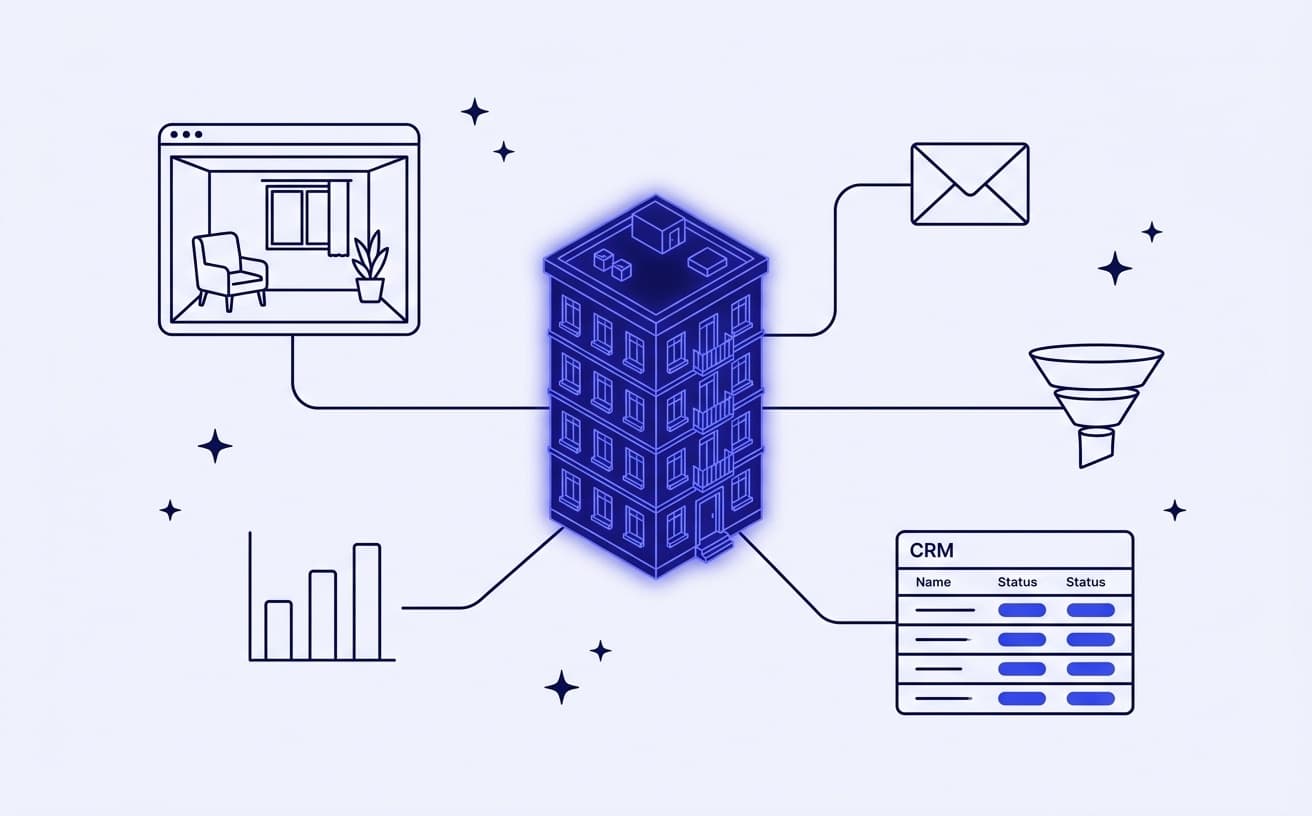
The main thing Your Next Home gives a developer is a single place for marketing, sales and customer management instead of a stack of disconnected tools. In practice that means:
- Data moves between marketing, sales and customer management without re-keying.
- The buyer gets the same experience wherever they meet you.
- Properties, leads and sales are easier to manage in one view.
- You can see your whole funnel, so you know where deals stall.
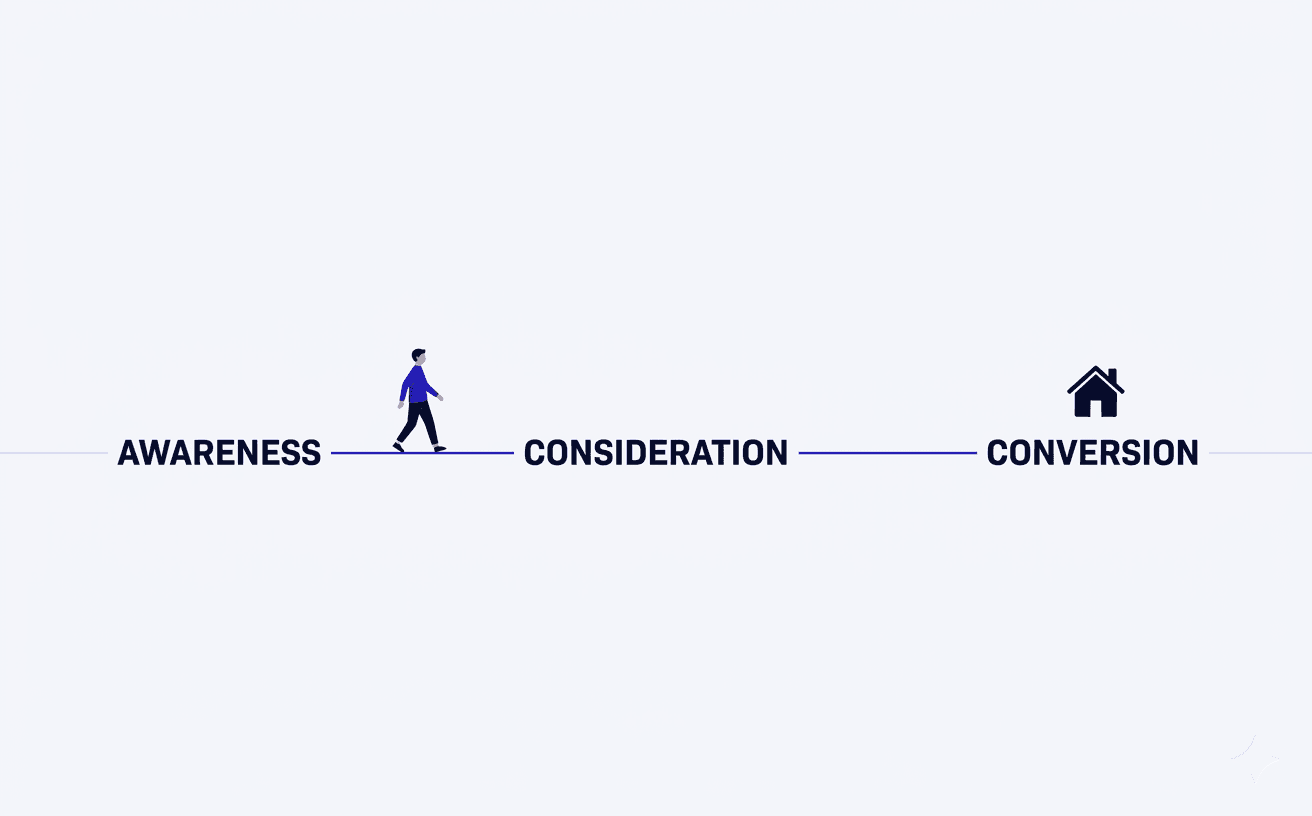
Here's how that plays out across the three phases of the journey.
Phase 1: Awareness
At this point a buyer is just starting to look. They don't know your development exists yet, or they've seen the name once and moved on. They're scanning, comparing, forming quick impressions, and most of that happens on a screen. In its 2025 Profile of Home Buyers and Sellers, the National Association of Realtors found that 46% of buyers now begin their search online, and every buyer surveyed used the internet at some point in the process. Your first impression is almost always digital, and you rarely get a second one.
Your job is to get noticed and leave that impression well.
How Your Next Home helps:
- An interactive 360° viewer that shows a property in detail and invites people to explore rather than scroll past.
- Fast-loading, immersive presentations that work for a buyer anywhere in the world.
Tips:
- Use sharp images and 360° views in your listings so they stand out from flat competitors.
- Share clips of your tours on social to pull people back to the full listing.
- Write detailed descriptions and metadata so search engines can find you.
Where developers lose people here is speed and sameness. A hero image that takes four seconds to load, or a listing that looks like every other one on the portal, and the buyer is gone before they've registered your name. Picture two listings side by side: one leads with a flat gallery of staged photos; the other opens straight into a tour the buyer can move through. The second doesn't just look better, it earns a few more seconds of attention, and attention is the whole game at this stage.
Phase 2: Consideration
Now the buyer is comparing options. They've got a shortlist, and they're looking for reasons to cross names off it. That's the uncomfortable truth of this phase: buyers spend as much energy ruling places out as ruling them in. Researchers at Harvard Business School, studying more than 75,000 home sales, found that virtual tours often work less by making a buyer fall in love and more by helping them decide which places aren't worth a visit. Your job is to survive that cut, then give them enough to start picturing the place as theirs.
How Your Next Home helps:
- Virtual walkthroughs with style configuration, so buyers can see the space set up to their taste.
- Interactive hotspots and callouts to point out what makes a unit different.
- Full unit spec sheets for the buyers who read every line.
Tips:
- Lead with the lifestyle a unit offers, not just its dimensions.
- Use the multiple-plan viewer so buyers can compare units side by side.
- Keep your apartment data in one place so the figures stay consistent everywhere a buyer looks.
The quiet killer at this stage is inconsistency. A buyer sees one price on the portal, another on your site, and a floor area that doesn't match the brochure. Each mismatch is a small reason to distrust you, and distrust ends consideration fast. Keep the numbers identical everywhere and let the buyer configure and compare, and you turn a shortlist entry into a genuine contender.
Phase 3: Conversion
The buyer is close to deciding. The emotion has mostly been settled; what's left is reassurance and logistics. This is where hesitation creeps in, and where a slow reply or a stale availability list can undo weeks of good work. Your job is to make saying yes as easy as possible.
How Your Next Home helps:
- A built-in CRM to manage leads and track how sales are going.
- An agent affiliate program with unique tracking links for your sales team.
- Real-time availability, so nobody falls for a unit that's already gone.
Tips:
- Use the analytics to spot your best-performing listings and do more of what works.
- Have your team work leads through the CRM with timely, personal follow-ups.
- Set up email that sends the right information at the right stage of the journey.
Consider the before and after. Before: a buyer enquires about a specific unit on Friday evening, hears nothing until Tuesday, and by then has been told the unit sold on Monday. After: the enquiry lands in the CRM, an agent follows up within the hour, and live availability means the buyer is only ever shown what's actually there to buy. The difference isn't a better product. It's a process that respects momentum.
Where developers lose buyers between stages
Most lost deals don't happen inside a phase; they happen in the handoff between them. A buyer who loved the tour never gets a follow-up. A hot lead is re-keyed from a spreadsheet into a CRM and loses their history on the way. Marketing runs a campaign that sales never hears about, so the calls come in cold.
These gaps are invisible on any single tool, because each tool only sees its own slice. That's the real argument for keeping everything joined up: not that any one feature is better, but that the buyer never has to start over. When the tour, the enquiry, the follow-up and the availability all live in one place, the journey stays continuous, and continuity is what quietly closes deals.
A few things that help at every stage
- Personalise. Use the analytics to tailor your approach to different kinds of buyer.
- Keep adjusting. Read your metrics regularly and change what isn't working.
- Be consistent everywhere. The experience should hold up online, on mobile and in person.
- Respond fast. Real-time notifications let you follow up while interest is hot.
Why the integration matters
The value isn't any single feature; it's that they're connected. With everything in one platform you can keep the buyer's experience continuous as they move through the funnel, see where deals get stuck, keep your messaging consistent, and free your team to spend their time closing rather than copying data between tools.
A quick checklist
Before your next release goes live, walk it as a buyer would:
- Does your listing open into something interactive, or just a flat gallery?
- Do the price, floor area and availability match across every place a buyer might look?
- Can a buyer compare units and picture the space set up to their taste?
- Does an enquiry reach a named person fast, with the buyer's history attached?
- Can you see, at a glance, which stage your deals stall at?
If you can answer yes to all five, the journey is doing the selling for you.
In short
Knowing your buyer's journey is how you sell more in a crowded market. Your Next Home gives you the tools for each phase and keeps them joined up. Use them well and you'll build experiences that land, work leads properly, and close more sales, treating every touchpoint as a chance to make the next step easy.