Marketing to property buyers means keeping up with tactics that keep changing. Today's clever idea becomes next year's baseline, so the work is never quite finished. The fix isn't to chase every trend; it's to build a mix of content across your website, blog and social channels that holds up over time.
Most property content fails for a dull reason: it's interchangeable. Swap the logo and the same gallery of empty rooms, the same "luxury living redefined" strapline, could belong to any developer in the country. Buyers scroll past it because it asks them to work, to picture the life, do the sums, guess at the neighbourhood, while telling them nothing they couldn't get from a competitor. Content that hooks does the opposite: it gives the buyer something specific to see, feel or use.
But where do you start? Here are five ideas that work for real estate, with examples you can act on.
1. Replace static photos with 3D content
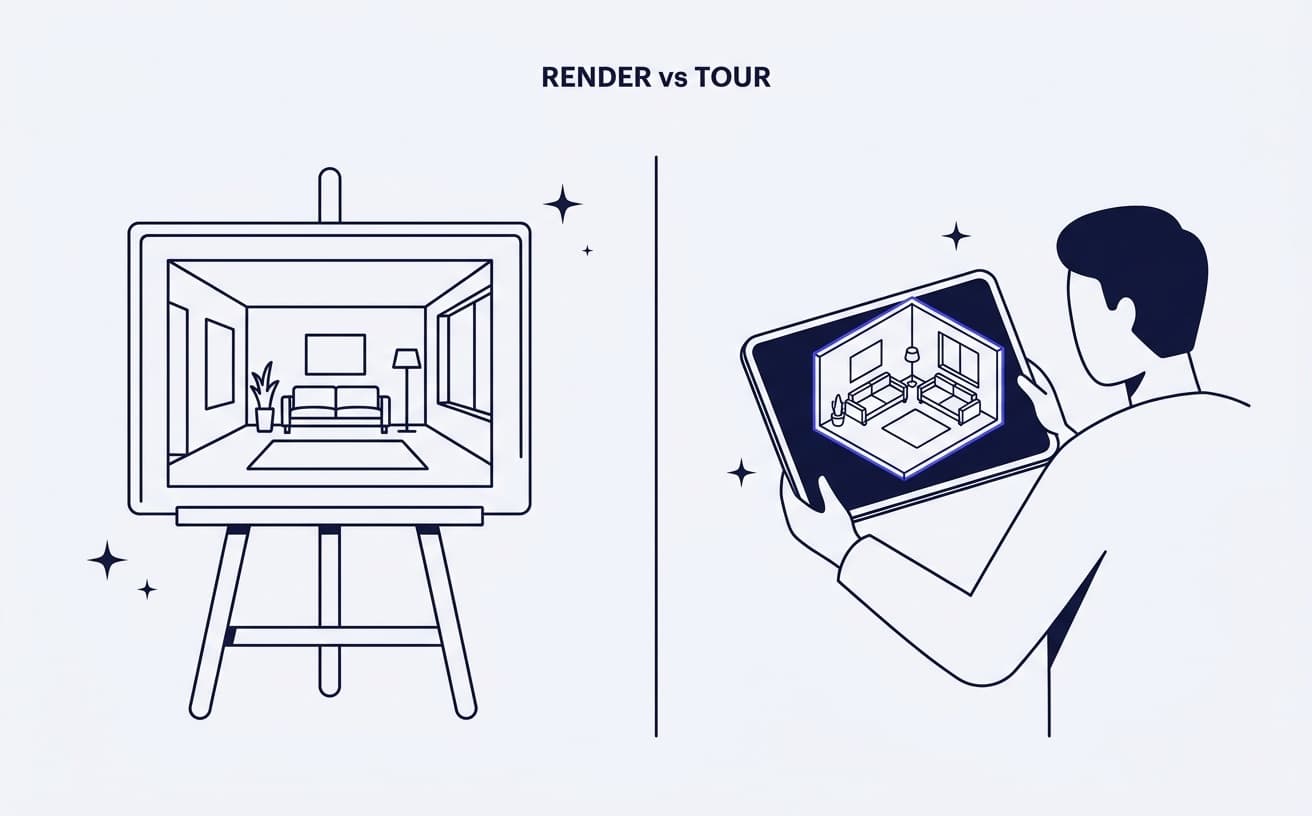
Photos, blueprints and renders are the backbone of most property marketing, usually shown as a set of images you scroll through like a brochure. That was fine for years. It isn't anymore: buyers now expect to interact with what they're looking at, and a flat slideshow feels dated next to video, 3D tours or images that respond to a click.
The gap is wider than most developers assume. A BoxBrownie.com study of 25,000 listings found that 94% carried no genuine virtual tour, and many of the ones that claimed to offer one were really just photo slideshows. Meanwhile the 2021 NAR Home Buyers and Sellers Generational Trends report found 58% of buyers want to see virtual tours and 67% want floor plans. Demand outruns supply, which means real interactive content still stands out rather than blends in.
Add interactive elements
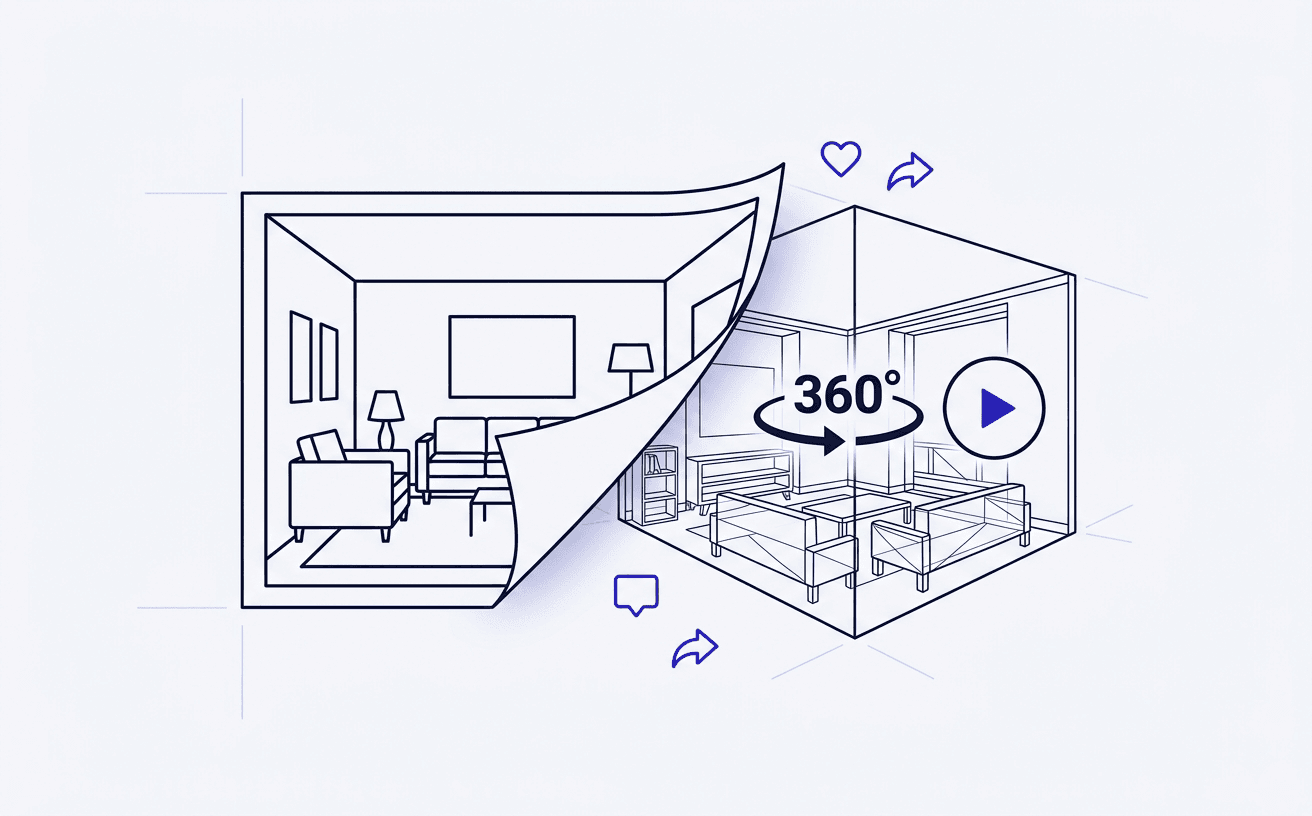
Platforms like Your Next Home let you add virtual tours, 3D floor plans and 360-degree hotspots to your site without a big technical build. A buyer explores the property the way they'd move through a game or an app, choosing where to go and what to look at. A few things worth including:
- Virtual tours so buyers can move through the property at their own pace and get a feel for the layout.
- 3D floor plans that beat a flat 2D blueprint, where clicking a room pulls up details or photos.
- 360-degree hotspots inside the tour to flag amenities like a pool, gym or shared courtyard.
Say you're launching a 40-unit development. Rather than one generic tour, publish a walkable model of each floor plan type and let the buyer pick the layout that matches their situation, then click through to the units still available in that line. The tour becomes a filter, not just a showreel.
The common mistake is treating 3D as a box to tick, then burying it three clicks deep or slapping "virtual tour" on a slideshow. If the buyer can't move through it, it isn't interactive, and they'll know within a second. Put it on the listing where the hero image would normally sit.
To tell whether it's working, watch dwell time and interaction depth, not just views. Longer sessions and clicks into rooms mean the tool is doing its job; a spike in views with flat time-on-page usually means the tour is hard to find or slow to load.
Use short video
Cut short clips that show off one feature at a time: a design detail, a renovation, a view. They're easy to post on social and they pull traffic back to your full listings. One tour shoot can yield a dozen vertical clips, so film with the cut-downs in mind rather than treating them as an afterthought.

2. Make the location work for you
A lot of developers market the building hard and forget the street it sits on. The surrounding area is a selling point in its own right, and it's the one thing a competitor across town literally cannot copy. A few ways to use it:
- Show the neighbourhood, not just the property. Put the area into your 3D content so a buyer can take a virtual walk and see what's nearby.
- Tell the area's story. A blog post on how a neighbourhood changed, say from an old industrial quarter into a family district with parks and schools, gives buyers a reason to care.
- Map the walk times. Infographics showing how close the shops, schools and parks are speak directly to anyone who wants a car-free life. A strong Walk Score is worth shouting about.
- Film the place. Short video tours of local spots, with the odd interview with a resident or shop owner, make the area feel real and lived-in. Cut them for Instagram Reels, TikTok or YouTube.
In practice, a "five minutes from your front door" post, coffee, primary school, station, park, each with a real photo and a real walk time, is cheap to make and highly shareable. It also earns local search traffic from people typing the neighbourhood name, buyers you'd otherwise never reach.
The mistake to avoid is fiction. Rounding a fifteen-minute walk down to five, or featuring an amenity that shut last year, gets caught the moment a buyer visits, and it poisons everything else you've said. Verify every claim on foot or on a map.
Measure this by tracking which location pieces pull organic search traffic and social shares. If your neighbourhood post out-performs a listing page, that's a signal to lead with place, not just product, on the next launch.
3. Give buyers something to feel
People remember property that made them feel something. Research by Slightly Mad found that ads built on an emotional connection, like family moments inside a home, performed 2.5 times better than straight feature-led ads. Buyers aren't shopping for four walls; they're shopping for a life, and the home is where they picture it happening.
So lean on story. Video tours that show the lifestyle a home enables, friends round the kitchen table, kids in the courtyard, will land harder than a walk-through of empty rooms. A ninety-second film that follows a morning, coffee on the balcony, the walk to the station, dinner back home, sells the routine, not the square footage.
The trap is manufactured emotion: stock-photo smiles and a swelling soundtrack over rooms nobody lives in. Buyers read that as an advert and switch off. Keep it grounded in the actual space and the actual area, and let the feeling come from something real.
Emotional content is harder to measure than a click, so watch the softer signals: completion rate on video, saves and shares over likes, and comments that mention the life rather than the price. Those tell you the story landed.
4. Tell your brand story
When someone's choosing where to live, they want to know who they're buying from. Do you care about design and materials? Do you put something back into the area you build in? Faced with two similar offers, buyers tend to go with the developer whose values line up with theirs. So say what you stand for, not just what you sell.
- Tell your own story on the blog: where the company started, what it cares about, what you've built before.
- Let clients speak for you. Reviews and testimonials from happy buyers carry your reliability better than you can claim it yourself.
The most persuasive version of this is proof, not adjectives. A short piece on how you handled snagging in a past development, or why you chose a specific material and what it cost, does more than a page of "quality-driven" boilerplate. A photo of a scheme five years on, still looking good, is worth a hundred renders.
The mistake is vagueness. "Passionate about excellence" says nothing and everyone claims it. Name the projects, name the choices, name the people.
To gauge whether the brand story is working, look at branded search volume and direct traffic over time, and at how often buyers arrive already knowing your name. A developer people seek out by name is spending less to win each sale.
5. Be genuinely useful
Buying a home is one of the biggest decisions your clients make, and it's rarely simple, from sorting a mortgage to picking finishes. Content that helps them through it earns their attention, and often their email address. A few ideas:
- Financial guides: posts on mortgages, securing a loan, or fixing up a credit score before buying.
- eBooks on bigger topics like buying a first home.
- Inspiration galleries of interior ideas or standout features from your portfolio.
- Webinars and live Q&As that tackle the questions and market worries buyers actually have.
A first-time-buyer guide gated behind an email address is the workhorse here: it captures a lead early, before the buyer has picked a development, and it positions you as the one who helped. Answer the questions your sales team hears every week, deposit sizes, timelines, what a reservation fee covers, and you're building trust while you build a list.
The mistake is making "useful" a thin cover for a sales pitch. A guide that spends three paragraphs on mortgages and the rest on your latest launch isn't a guide, and readers feel the switch. Earn the pitch by being helpful first.
Measure this by leads captured and, further down the line, how many of those emails convert to viewings and reservations. A guide that pulls downloads but no bookings is attracting readers, not buyers, worth knowing before you write the next one.
Don't stop at publish: repurpose and distribute
A single strong asset should feed every channel. One 3D tour becomes vertical clips for social, a neighbourhood walk-through, a still hero for the listing and a blog embed. One buyer guide becomes an email sequence, a webinar and a fortnight of social posts. Making the content is half the job; getting it in front of the right buyer, on the channel they actually use, is the other half. Plan the cut-downs before you shoot, not after.
Wrapping up
Strong visuals, location storytelling, emotional pull, a clear brand and genuinely useful advice each give a buyer a reason to stop and pay attention. The thread running through all of them is honesty: tell your real story, know who you're talking to, and make the buying journey a little easier.
If pulling this together feels like a lot, especially building a full 3D content hub, that's the part we help with. Your Next Home embeds into your existing site, and our team can take on the content work with you.